
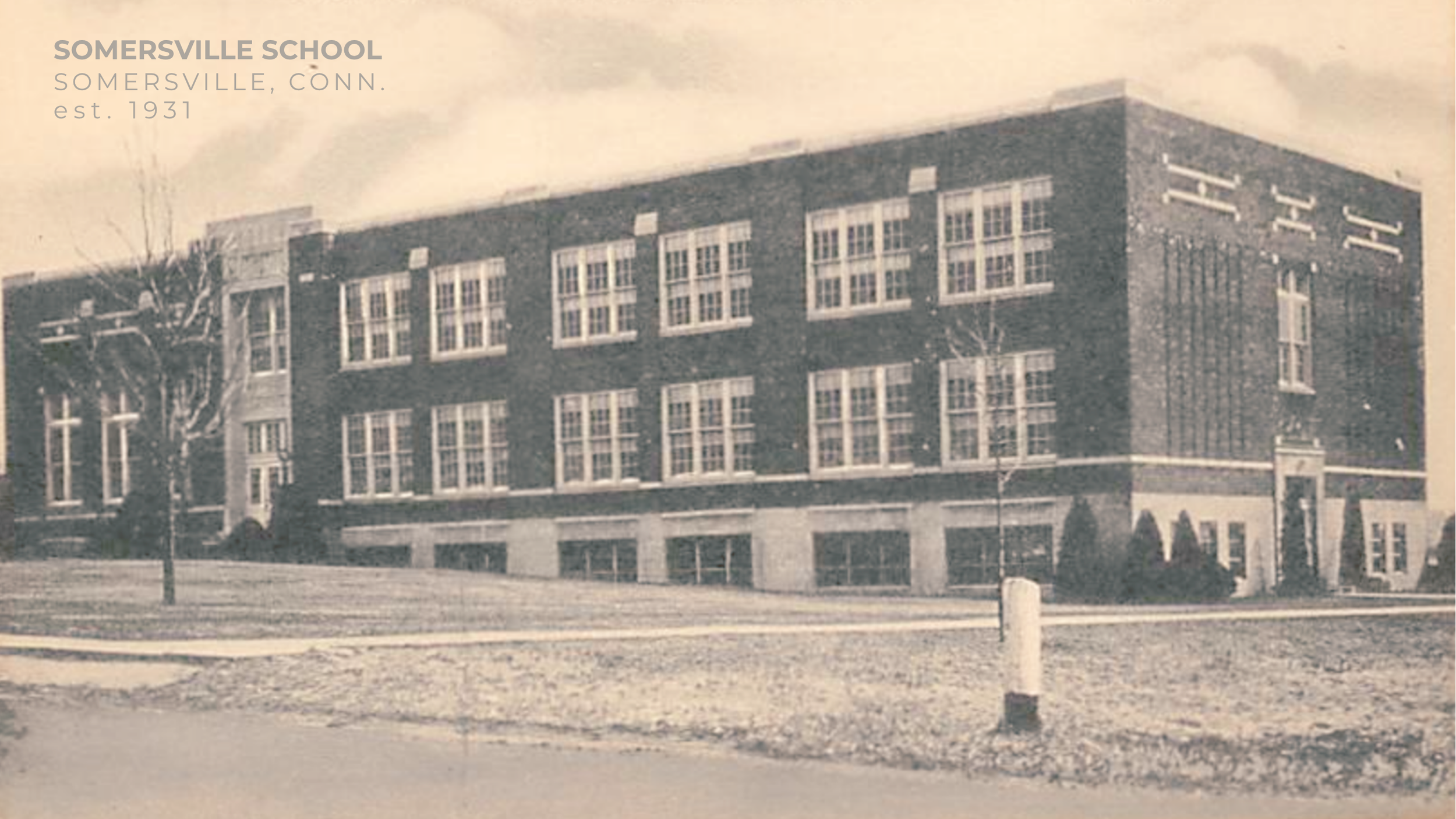
Welcome to the official site for the Somersville School - Connecticut.
The Somersville School: A Historical Overview
1883 — Spiritualist Foundations: Long before a brick schoolhouse was conceived, this picturesque four-acre parcel served as a vital spiritual and social nexus for the village center.
1917 — The Civic Mobilization: On October 6, 1917, the citizens of Somers mobilized at a special town meeting to permanently secure this property for the public domain. Acting on behalf of the town, Selectmen Albert S. Hurlburt, Benjamin F. Cooley, and Herbert E. Thatcher executed a fee-simple purchase from custodian Dwight H. Lyman for $2,750. Title ownership was officially recorded on November 30, 1917, in Volume 9, Page 308 of the Somers Land Records.
1920’s - early 1930’s — Consolidation of Schools & Funding: Judge Ernest Fuller provided the funds for the Kibbe-Fuller School in Somers Center. This generous donation allowed the town to reallocate its remaining public funds specifically for the construction of a new school in Somersville. The new facility replaced the older Somersville Grammar School and was designed to accommodate both elementary and junior high school students.
1933 — The Institutional Masterpiece: Constructed as a progressive, consolidated elementary school to replace scattered one-room district schoolhouses, this landmark 22,700+ square-foot load-bearing brick facility officially opened its doors. Designed by the notable architectural firm Ebbets & Frid of Hartford, it stood as a proud symbol of educational evolution for nearly seven decades, concluding ~1996.
1998–2026 — The Academic Preservation: The property transitioned into a new era of private educational excellence under the custodianship of Stony Hill Grammar School, Inc. (1998-2016) and most recently the Speech Academy (2016 - 2026). Over nearly two decades, this institution systematically deployed significant capital extensions to fortify the structural shell, achieve extensive environmental code clearances, and update mechanical frameworks for modern safety.
2026 — Reimagining what’s possible for Somersville
The Capital Improvement Legacy
The Structural Backbone: Built on heavy poured concrete footings with deep load-bearing exterior brick masonry walls.
The Volumetric Scaling: Features sweeping 11.5-foot vertical clearances across the first and second-story classroom levels, working in tandem with an unobstructed 3,265-square-foot gymnasium space boasting a 20-foot ceiling height.
The Logistical Parking Asset: Includes 17,000 square feet of pre-existing asphalt pavement positioned outside of federally designated flood hazard zones or wetlands, offering ready-made infrastructure for vehicle control and walkability.
The Environmental Bilateral Clearances: Fully abated across its main primary circulation corridors and restrooms , backed by certified Phase Contrast Microscopy (PCM) testing proving airborne levels remain safely below strict 0.01 f/cc re-occupancy thresholds .
The Shell Defenses: Fortified by localized structural restorations, including a high-performance, insulated roofing cover installed in late 2009.
Reimagining the Future: "The great task of growth is to assure that we do not forget our past in the process."
We believe that suburban sprawl and faceless development do not have to be the default choices for our town. Instead, we are quietly designing a sophisticated, low-impact master plan to adaptively reuse this historic brick structure.
While specific architectural blueprints remain intentionally flexible to adapt to market conditions, community feedback, and approvals our core guiding principles for tomorrow are fixed:
Pedestrian Walkability & Community Balance: Designing low-impact spaces that harmonize seamlessly with the town’s upcoming public parklands, ensuring that residential, commercial, or civic components do not introduce late-night noise, traffic, or safety liabilities to our neighborhood center.
Civic and Historic Integration: Exploring creative layout models that can elegantly weave essential, quiet public services—such as veteran and local family resources—directly into the physical fabric of the campus.
Turnkey Infrastructure Utilization: Maximizing the building's existing 6,970-square-foot walkout lower level and historical commercial kitchen plumbing branches to anchor artisanal, daytime gathering spaces for park visitors, families, and hikers.
Deep Architectural Sustainability: Modernizing the envelope with high-efficiency insulation, micro-zoned climate networks, and clean green energy generation vectors—such as electric heat pumps and solar technology—to establish a model of historic preservation for the Town of Somers and State of Connecticut.
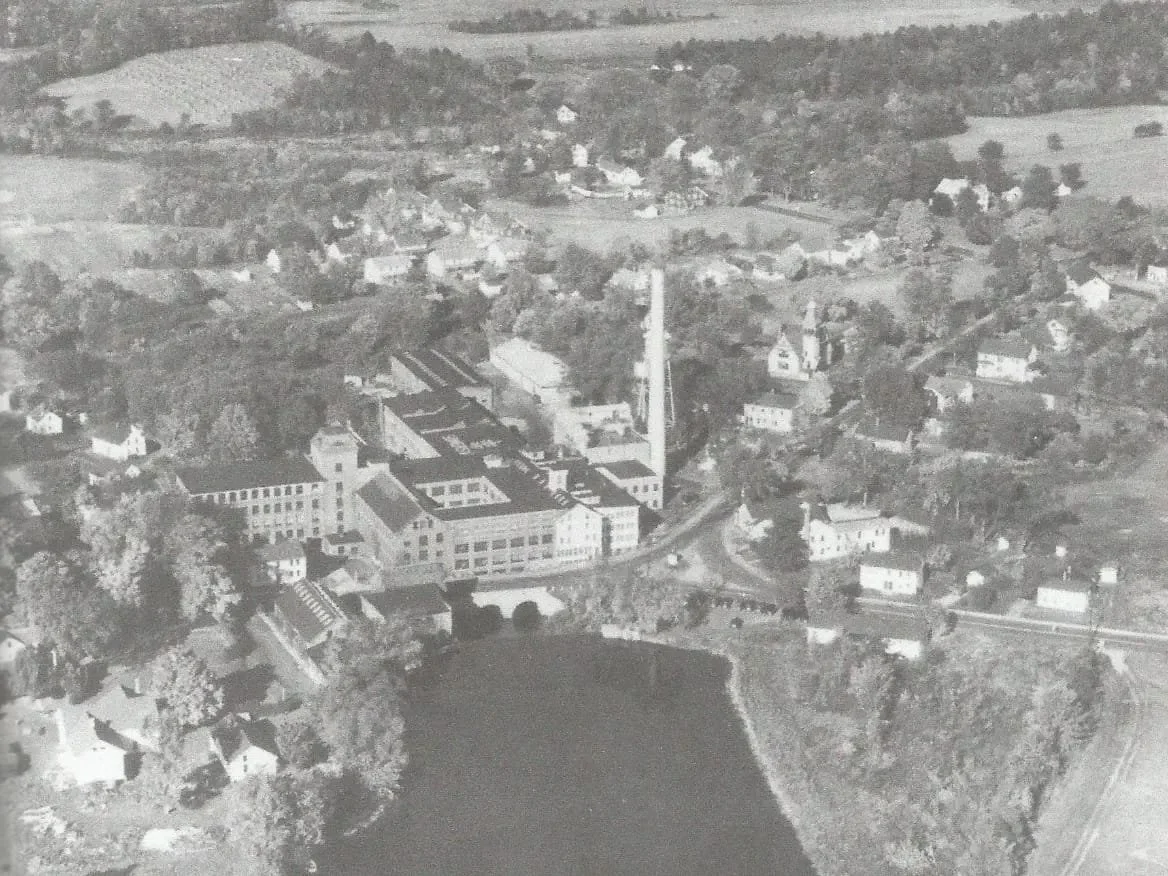
Arial view - Somersville.
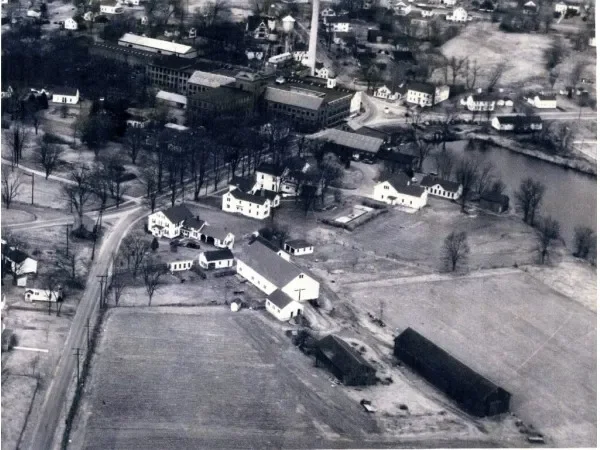
Arial view - Somersville.
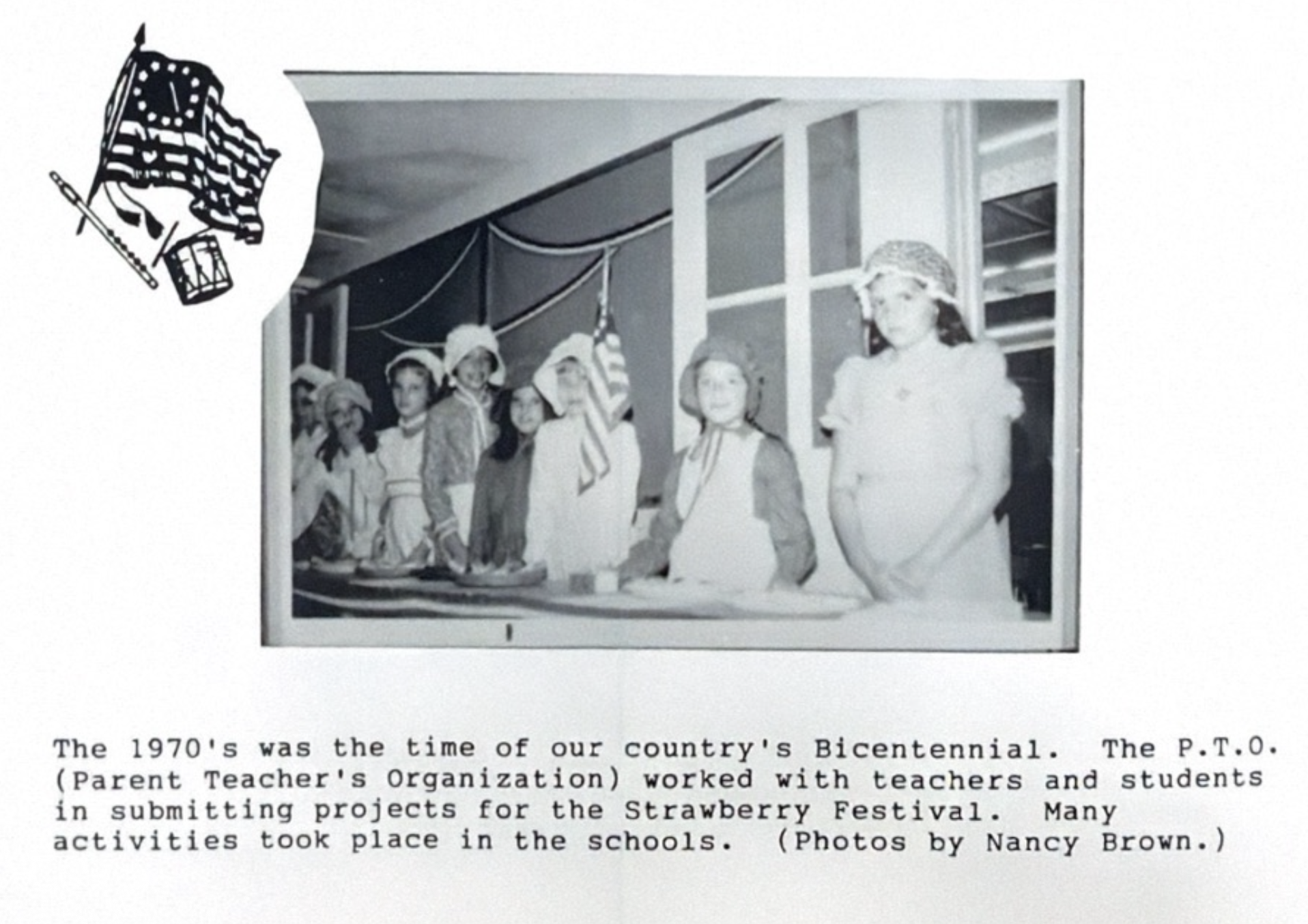
The 1970's was the time of our country's Bicentennial. The P.T.O. (Parent Teacher's Organization) worked with teachers and students in submitting projects for the Strawberry Festival. Many activities took place in the schools. (Photos by Nancy Brown.)
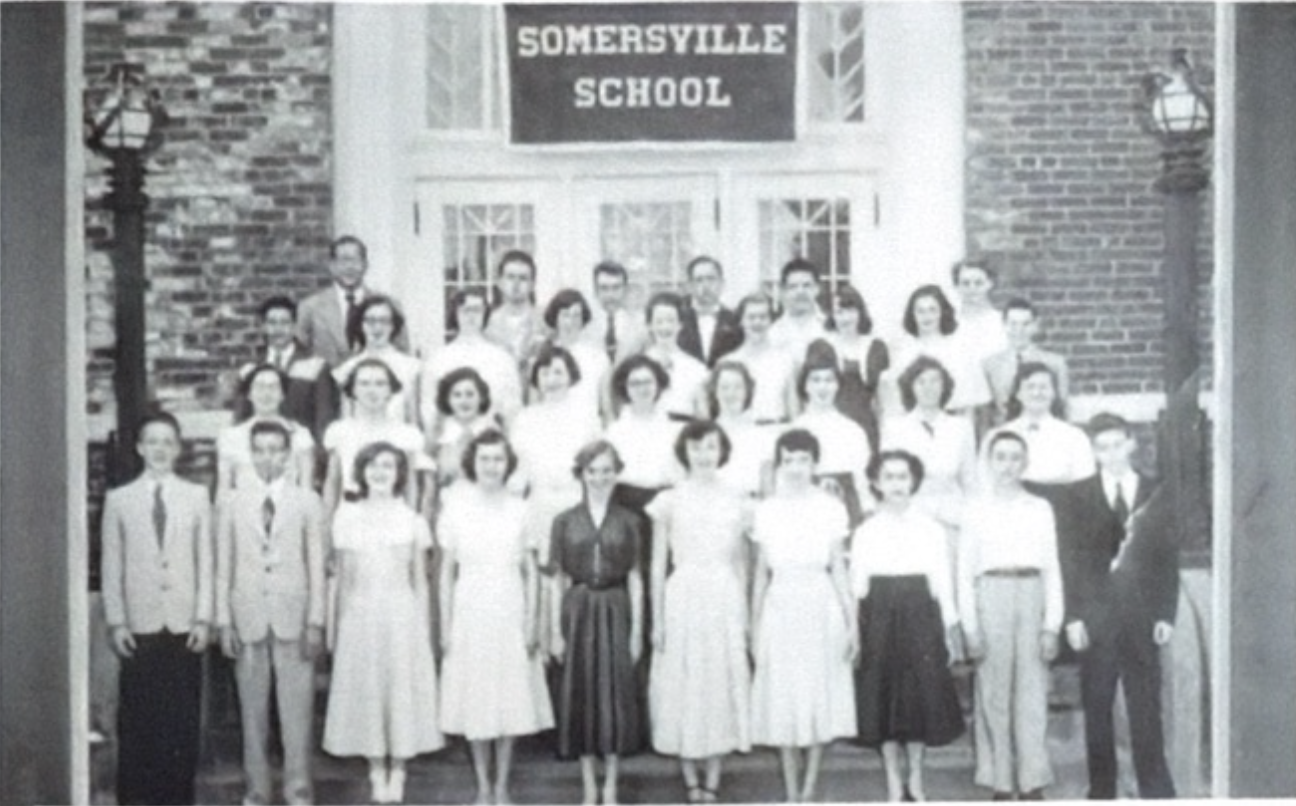
Somersville School - 8th Grade Class - 1955 Cynthia King, Irene N. Gronninger, David Cordner, Donna S . Cheney, Dianne Bordeaux, Carol Jones, Cynthia Leroux, Harold Eastwood, Paul Monstillo, Eleanor Ladd, Elaine Lawless, Art, Cynthia Angela Monty, Louise Buck, Helen Rose, Patricia F. Kozikowski, John Brennan, Barbara McLean, Paul B. Easton, Jr., Donald Thibeault, Susie Klaus, Arlene Shac, Lynne Bodry, Susan White, Ray Newcomb, Janet Balch, Sandra G. Smith, Graham Mathews, Gordon Lloyd, Richard "Dick" Berozsky, Corrine Wiers, Eleanor Kapahn?, Linda Butler, Nancy Wells, Neil Connell, Joseph J. Homicki. (Names appear as signed on back of picture.) (courtesy of Becky Connell)
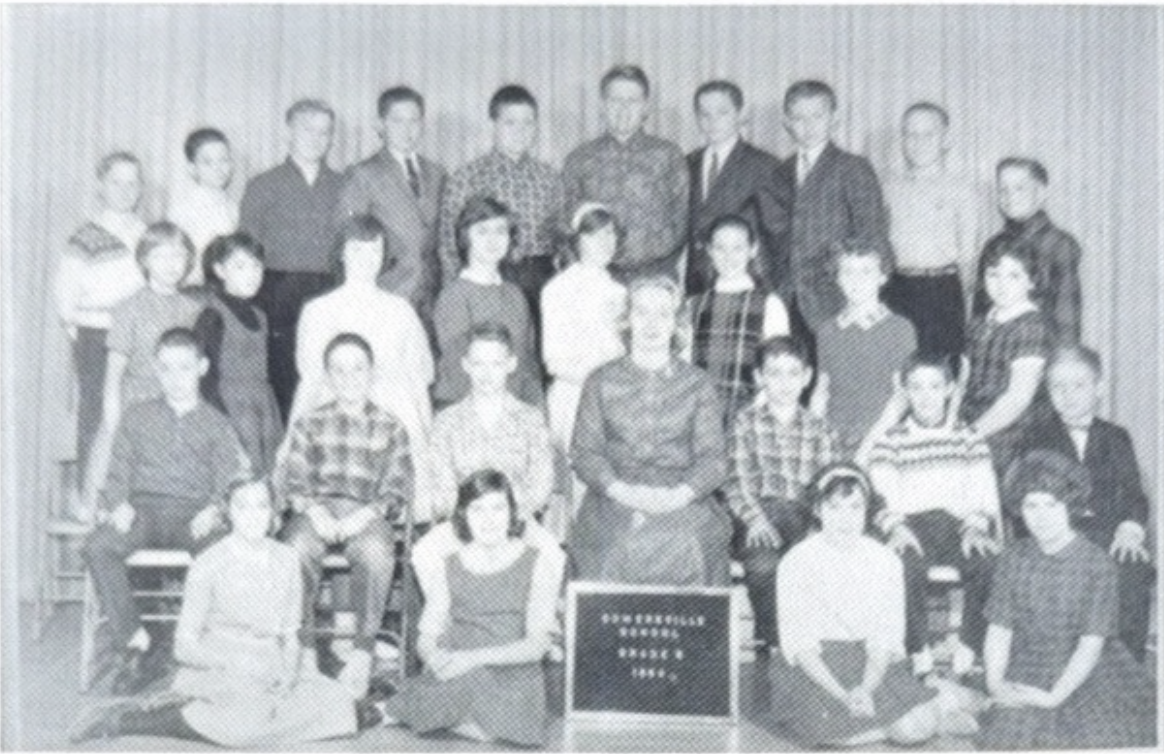
Somersville School - Grade 6 - 1964 Row 1 - Kim Wilbur, Debbie Bauket, Cathy Shepard, Wendy Crandall. Row 2 - Gordon Humphrey, Danny Irish, Tex Levitz, Miss Barbara Schindler, Tony Jacobson, Rick C., EverettRedneau. Row 3 - Robin Granielle, Cocetta Pio, Cheryl Parks, Maureen Hogan, Judy Connick, Bonnie Breck, Linda Mason, Donna Leathe. Row 4 - John Ford, Jeffrey Skeller, Peter Rockett, Steve Scheitlin, Paul Hastings, David Bakewicz, Gregg Schumway, Henry Kusia, David Higgins, Ralph Keeney. (courtesy of Becky Connell)
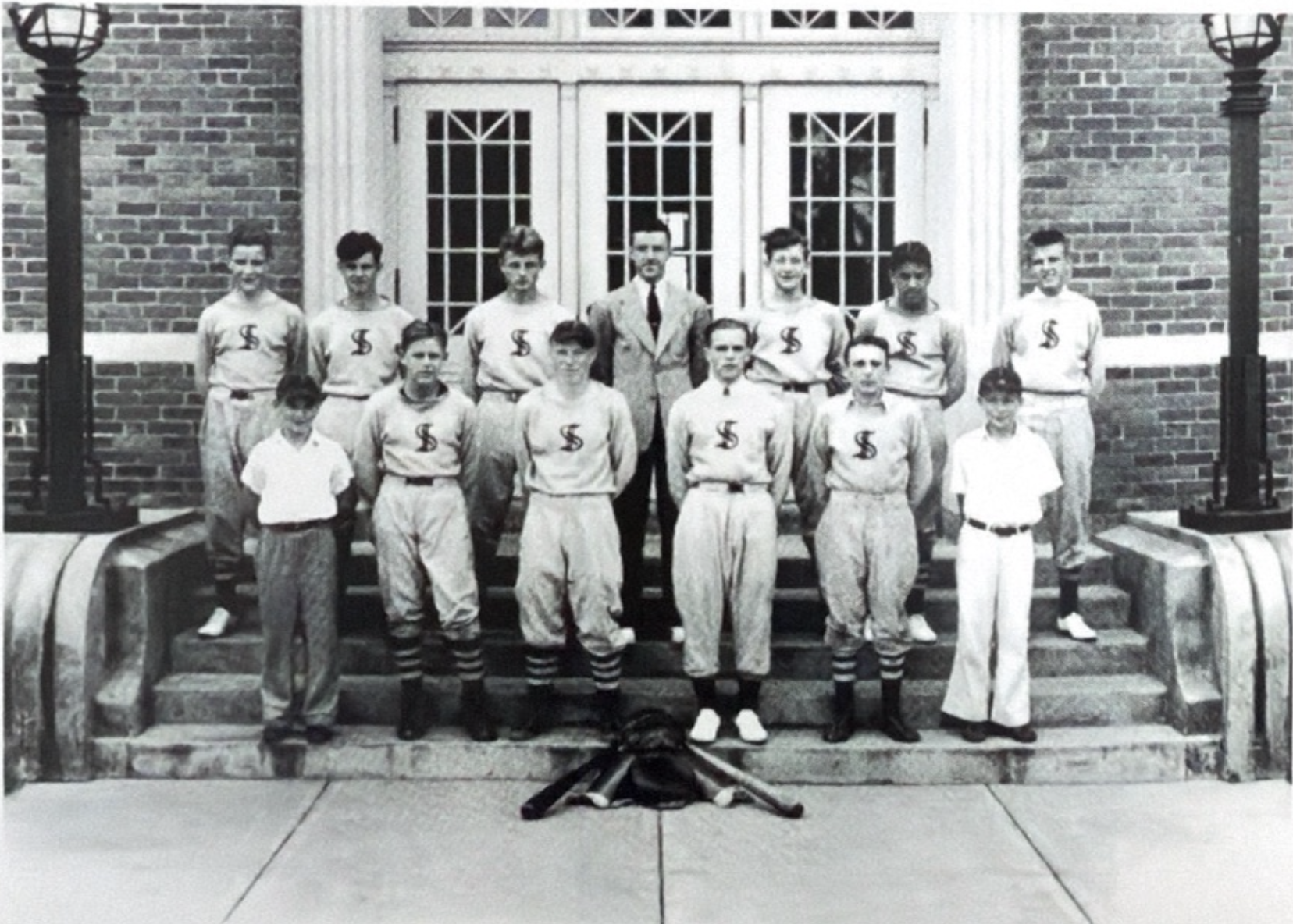
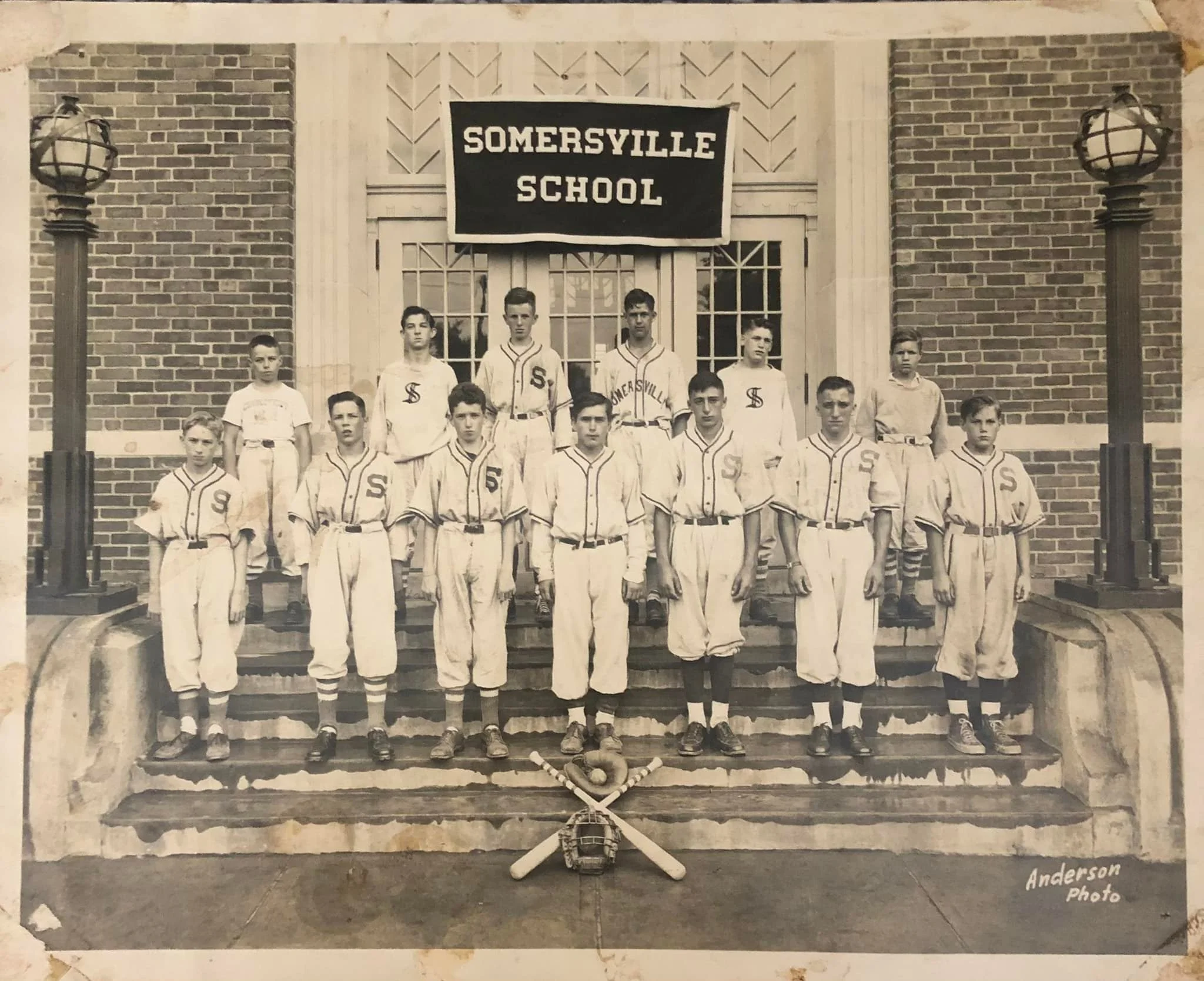
Somersville Baseball Team - 1939 (courtesy of Mr. Ed Patewic)
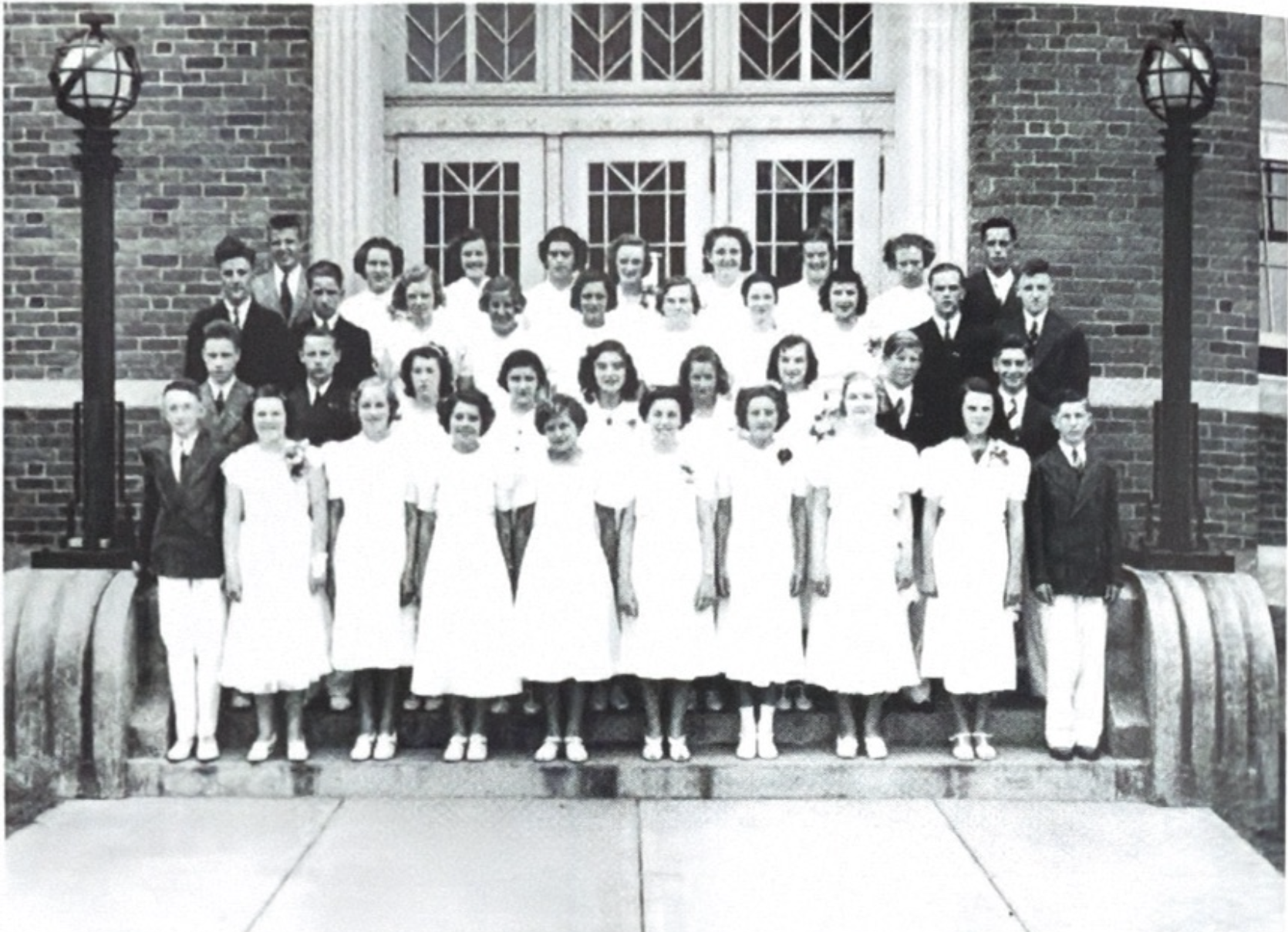
Graduation Class - 1938 (courtesy of Mr. Ed Patewic)
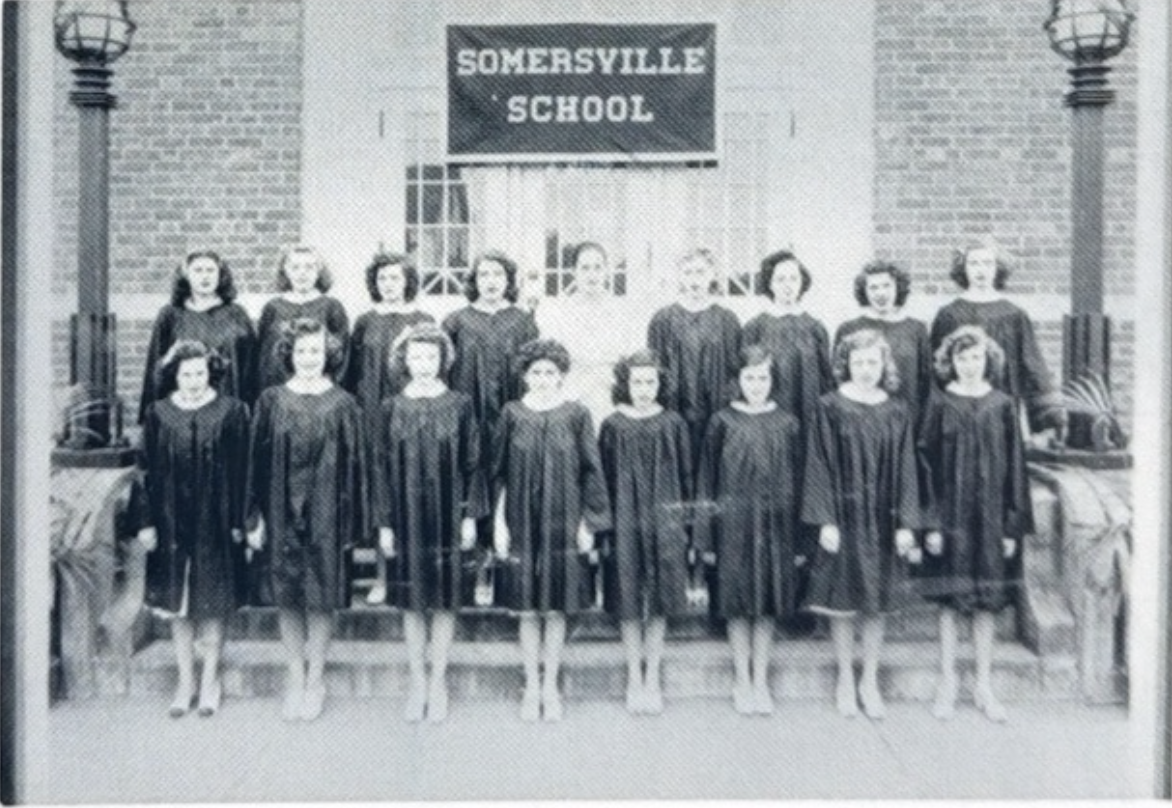
Somersville School Glee Club - Early 1940's Row 1 - Norma Bastarache, Roselle Heaps, Beatrice Kulas, Terry Cormier, , Marjorie Wild, Audrey Larned, • ROW 2 - Florence Girschic Brown, Marjorie Kibbe, Jeanette Hebert, Mary Brennan, Barbara Mack Poole, Geneva Blizniak, Priscilla Converse, Beverly LaBreque, Joan Hutton.
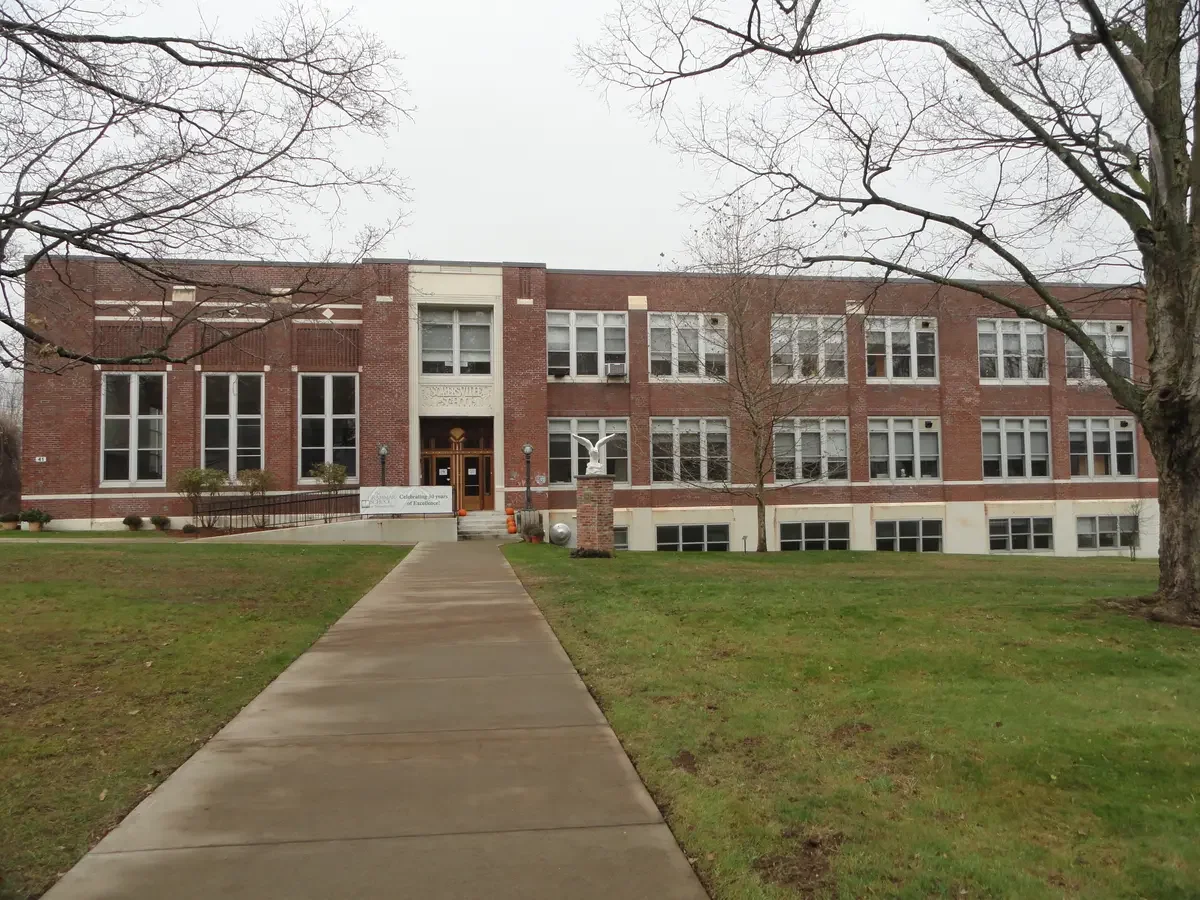
Somersville School mid-late 1990s.